

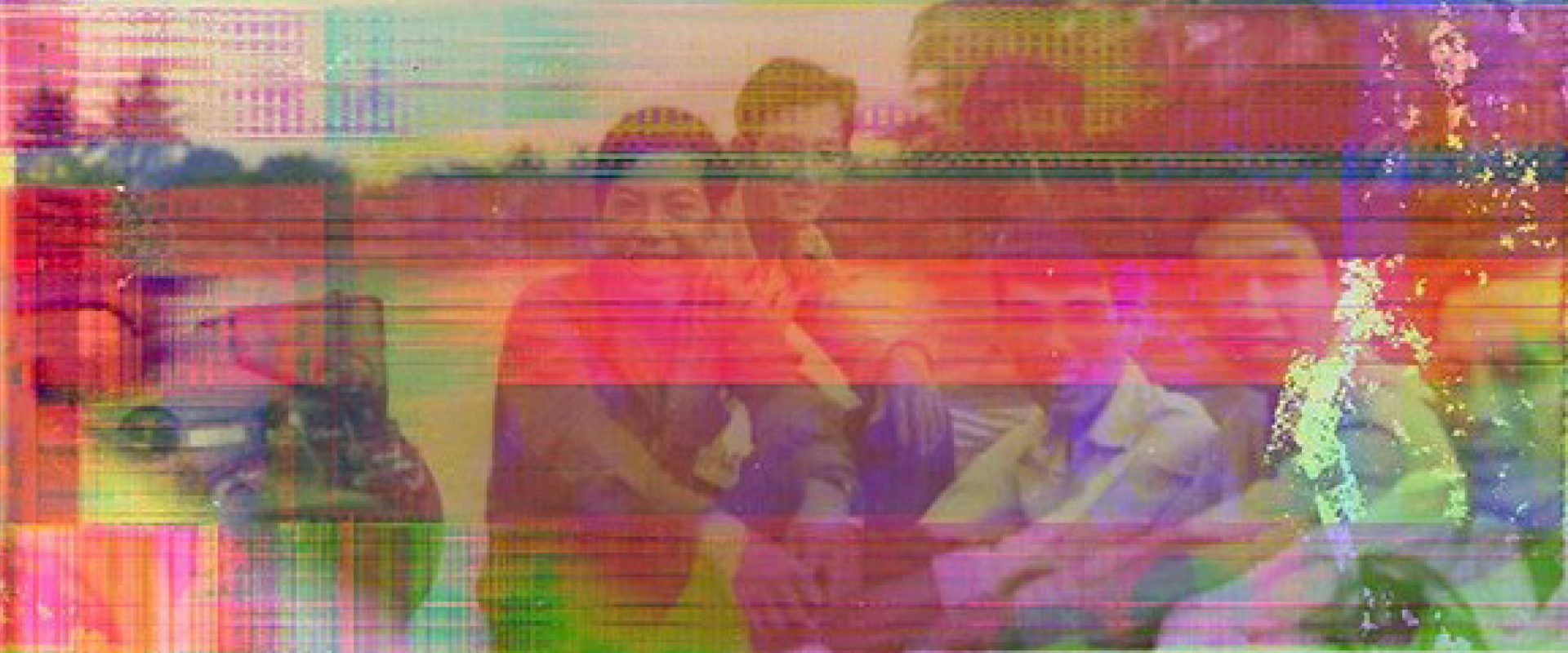

The Museum of Lesbian Dreams is the first retrospective exhibition and publication showcasing three decades of Millie Wilson’s work (United States, b. 1948). An influential yet underrecognized artist and pedagogue who taught generations of artists at the California Institute of the Arts, Wilson has deftly examined feminism, queerness, and the historical erasure of such positions from institutions of art.
Originally organized by Krannert Art Museum at the University of Illinois Urbana-Champaign, where it was on view from August 29, 2024, through March 1, 2025, the exhibition brings together major loans from the artist, private collections, museums, and galleries, including 15 works from The Luckman’s Permanent Collection.
Read more
Alongside her peers such as Lutz Bacher, Nayland Blake, Felix Gonzalez-Torres, and Lorna Simpson, Wilson joined 1980s postmodernism with the personally and politically charged conceptualism of the 1990s. Her work reflects a particularly unruly conception of queerness that emerged in California during these decades. For example, Wilson’s 1989 installation at LACE titled Fauve Semblant: Peter (A Young English Girl) purported to rediscover a lesbian artist named Peter, who took her name from Romaine Brooks’s 1923–24 portrait of the artist Gluck. Wilson’s faux-retrospective highlighted objects attesting to Peter’s fictionalized life and work: a photograph (taken by Catherine Opie) of Wilson dressed dapperly as Peter; life-sized images of Peter’s smoking jacket, shoes, cane, bow tie, and eyeglasses; and a singular “surviving” painting. Wilson’s installation anticipates many artistic projects utilizing speculation and fabulation to examine queer and trans history, including Zoe Leonard and Cheryl Dunye’s The Fae Richards Photo Archive (1993–96), Ulrike Müller’s Herstory Inventory (2009–12), and Chris E. Vargas’s Museum of Trans Hirstory & Art (MOTHA; 2013–present).
In the 1990s, Wilson began mounting her works that appropriated museum practices and authority under an expansive project titled “The Museum of Lesbian Dreams,” an assertion of queer world-making as well as a mockery of the Freudian obsession with the unconscious and midcentury sexology research. Duchampian trickery and surrealist tributes abound in Wilson’s invented collection. Trophy (1990) is a bronze chalice lined with rabbit fur that features a diagram from a 1948 study of homosexuality etched into the base. The illustration charts the pathologies of a distinct individual, “Nora M.,” who refused to disavow her sexuality or agency; the work is thus a tribute to Nora’s resilience expressed through the aesthetic legacy of surrealist Meret Oppenheim. Held within a finely crafted vitrine, Trophy also reflects Wilson’s appropriation of museum display techniques. The two bronze plates that comprise another work, Trousers (for Tony) (1992), memorializes the losses of the AIDS crisis, and specifically the artist Tony Greene (1955–1990), who was Wilson’s student and close friend.
Wilson produced fantastical wig sculptures throughout the 1990s—including a monumental, abstract embodiment of accused serial killer and tabloid sensation Aileen Wuornos, who became the focus of numerous other works. More recently, Wilson has turned her investigations to an archive of mid-century vernacular photographs she culled from eBay and thrift stores, enlarged and presented as lightboxes.
This thematic exhibition emphasizes Wilson’s consistent appropriation of museum display practices and institutional authority, her art historical references to Dada and Surrealism, her sharp attention to gendered portrayals of sexual deviance in early twentieth-century psychoanalysis and sexology, and her longstanding interest in bodies as unruly and contested sites. A select number of ephemera and teaching materials demonstrate how Wilson’s work enfolds LGBTQ cultures, art histories, and activism in the United States.
The exhibition is accompanied by a full-color comprehensive publication with newly commissioned scholarly essays by curator David Evans Frantz and scholar Jill H. Casid, a conversation among artists who studied with Wilson (Beatriz Cortez, Richard Hawkins, Kang Seung Lee, and Jess Rath), and extensive photographic documentation of Wilson’s work.
Image: Red Top, 1992. Millie Wilson. Taryn Mills Photography. Courtesy of the artist.
This exhibition was curated by David Evans Frantz and organized by Amy L. Powell for Krannert Art Museum, University of Illinois Urbana-Champaign. The exhibition has been reorganized for The Luckman by Aaron Gomez. At the originating venue, Millie Wilson: The Museum of Lesbian Dreams was supported by the Terra Foundation for American Art, the Henry Luce Foundation, the Andy Warhol Foundation for the Visual Arts, the Michael Asher Foundation, the Eileen Harris Norton Foundation, the Richard M. and Rosann Gelvin Noel Krannert Art Museum Fund, and several individual exhibition supporters.
Millie Wilson: The Museum of Lesbian Dreams is made possible by Teiger Foundation.

Curated by David Evans Frantz
Organized for Krannert Art Museum by Amy L. Powell
Organized for The Luckman by Aaron Gomez
Millie Wilson: The Museum of Lesbian Dreams opening exhibition is organized by The Luckman Fine Arts Complex at Cal State LA as a part of the 2026 Circa: Queer Histories Festival, presented by One Institute.
David Evans Frantz
David Evans Frantz has been preparing this exhibition since 2019, working closely with Millie Wilson. His curatorial work has focused on bringing attention to overlooked queer artists, seen in the exhibitions Teddy Sandoval and the Butch Gardens School of Art and Axis Mundo: Queer Networks in Chicano L.A. (both co-curated with C. Ondine Chavoya). Axis Mundo propelled new recognition for artists, including Roberto Gil de Montes, Mundo Meza, and Joey Terrill, among others. With Christina Linden and Chris E. Vargas, Frantz is co-editor of the book Trans Hirstory in 99 Objects, a publication of the Museum of Trans History & Art (MOTHA).
Amy L. Powell
Amy L. Powell is a curator and writer based at the University of Illinois Urbana-Champaign, where she serves as Curator of Modern and Contemporary Art at Krannert Art Museum and Curator of Campus Arts Research in the Office for Arts Integration. Her research engages contemporary art with a commitment to university art museums as sites for knowledge production and experimentation. Her research has been supported by the Andy Warhol Foundation for the Visual Arts, the Smithsonian Institution, and the Institute for Research in the Humanities at the University of Wisconsin–Madison.
Aaron Gomez
Aaron Gomez is a Los Angeles-based curator. He carries a BFA from the University of New Mexico. Since 2021, he has been Gallery Manager at The Luckman Fine Arts Complex at Cal State LA. He previously served as curator at Haphazard Gallery. Recent curatorial highlights at The Luckman include solo presentations of artists Brian Zamora and Raymundo T. Reynoso.
Press Coverage Highlights

- Save the Date:
Sat, Oct 24 | Artist Talk
A conversation between exhibition curator David Evans Frantz and artist Millie Wilson, tracing the ideas, history, and creative process behind this landmark body of work. The conversation will be followed immediately by the exhibition’s opening reception.
MORE INFO
Sat, Oct 24 | Opening Reception
The opening reception of the retrospective exhibition Millie Wilson: The Museum of Lesbian Dreams, marking Wilson’s homecoming to Los Angeles where she lived and worked as an artist and educator for many decades.
Be among the first to see the exhibition and enjoy a rare opportunity to see the artist and exhibition curator in conversation. The artist conversation will be held in The Luckman immediately preceding the opening reception.
- Past Events:
Artist Talk & Opening Reception
Exhibition Hours
October 24, 2026 – April 10, 2027:
Wednesday – Saturday
12:00 p.m. – 5:00 p.m.
During Luckman Theatre presentations:
1 hour prior to start time + during intermission.
By appointment:
To request, please email us here.
Admission to The Luckman Gallery is free.
Parking
Guest parking permits can be purchased at physical pay stations located in designated pay lots or through PayByPhone. All permits are virtual, and your vehicle’s license plate number is required at the time of purchase.
PayByPhone
– Current rate for a one-hour parking permit: $4.30
– Visa and MasterCard only.
– The rate is inclusive of all taxes and fees.
One-Hour Parking
One-hour parking permit is available at:
- Lot 4A — PayByPhone location code: 1576
- University Student Union lot — PayByPhone location code: 1577
Please note: Only one-hour daily permits are available and valid in these locations.
Additional Parking
Parking is also available directly in front of The Luckman on the top level of Structure C. During campus events and performances, as well as on weekends, event parking rates apply in this structure.
Directions to The Luckman Gallery
From Lot 4A — Google Maps
From University Student Union — Google Maps
From Structure C — Google Maps
From the Cal State LA Transit Center — Google Maps
- Past Events:
Sat, Nov 1 | Opening Reception
Saturday, November 1, 2025, 2–5 PM
Light refreshments will be provided.
Sat, Dec 6 | Archives Conversation
Saturday, December 6, 2025
2:00 p.m. – 5:00 p.m.
Moderated by archivist and public historian Moriah Ulinskas, this conversation will address how artists and local organizations work with historical and community archives.
Speakers include:
Lylliam Posadas, co-founder and co-director of Your Neighborhood Museum; Keko Jackson, artist and archivist, Los Angeles Contemporary Archive; Leah King, artist; Camille Wong, artist.
The program concludes with a live music performance by Leah King at 4:00 p.m.
About the Panelists
Keko Jackson
Keko Jackson is an artist and archivist living in Los Angeles. His work extends across photography, curation, writing and publications that take a discursive approach to history and its relationship to images.
Leah King
Leah King is a multimedia artist working in collage, sound, film, and performance. Her intricately layered visual and sonic works explore race, gender, and power through a futurist lens. Centering archives as portals for future-building, King creates multisensory installations rooted in ancestral storytelling and community repair. As a vocalist and composer, she creates soundscapes influenced by house, gospel, and experimental jazz. King’s work has been exhibited at SFMOMA, the Contemporary Jewish Museum, and Charlie James Gallery, and supported by the Brooklyn Arts Council, Berlin Music Board, and many others. She holds an MFA from USC Roski School of Art and Design, where she researched house music and Black futurity, and a BA from Barnard College/Columbia University in Black diasporic music and dance.
Lylliam Posadas
Lylliam Posadas is the Co-Founder and Co-Director of Your Neighborhood Museum and the Colonial Pathways Repatriation Manager at the Museum of Us. Lylliam has over 15 years of experience in repatriation and focuses on collaborative program development, community-led research practices, and transformative justice practices in museums. Lylliam has field experience in Ghana, Peru, Louisiana, and California, as well as experience facilitating repatriation, building repatriation programs, and guiding research protocols at the Fowler Museum at UCLA, the Autry Museum of the American West, and the Museum of Us. Lylliam received an M.Sc. in Technology and Analysis of Archaeological Materials from University College London and Bachelor degrees in Anthropology and Psychology from UCLA.
Moriah Ulinskas
Moriah Ulinskas is a community archivist and public historian whose research examines histories of dispossession, focusing on how marginalized communities organized to resist displacement and how that history of resistance lies latent in archival collections today. Her work investigates both the physical displacement of minority communities and their erasure from historical memory, examining how these groups preserved their stories despite systematic exclusion from official narratives. She is a founding member of the Community Archiving Workshop (CAW), a collective of audiovisual archivists who facilitate audiovisual preservation in community-held collections. Since 2011, CAW has collaborated with 65 organizations across four continents to conduct archival preservation workshops and kickstart community archives.
Camille Wong
Camille Wong (they/she) is a research-based artist living in Los Angeles, CA. Their practice examines power, geopolitics, and historiography through the lens of media and spectacle. They approach the gaze of ethnography by authoring the personal into the world through experimental documentary. Their recent work examines media and rhetoric during the Cold War, exploring how these broader political systems shaped global ideologies and immigration patterns. Their work has been shown at the Art, Design, & Architecture Museum at the University of California, Santa Barbara, and has exhibited their work throughout Los Angeles including the Los Angeles Municipal Art Gallery, LACE (Los Angeles Contemporary Exhibitions), and Monte Vista Projects. They received their MFA in Media Art at UCLA and BAs in Art and Environmental Studies from UCSB.
Sat, Jan 17 | Artist & Curator Walkthrough
Saturday, January 17, 2026
2:00 p.m. – 5:00 p.m.
Gain deeper insights into the exhibition through artist & curator walkthroughs, offered in 30-minute blocks.
Light refreshments will be provided.
Sat, Feb 21 | Performance Lectures
Saturday, February 21, 2026, 2–5 PM
Experience the work by the fifteen artists in the exhibition, and witness performance lectures by Artemisa Clark and Prima Jalichandra-Sakuntabhai. Light refreshments will be provided. This is the last event in conjunction with the exhibition.